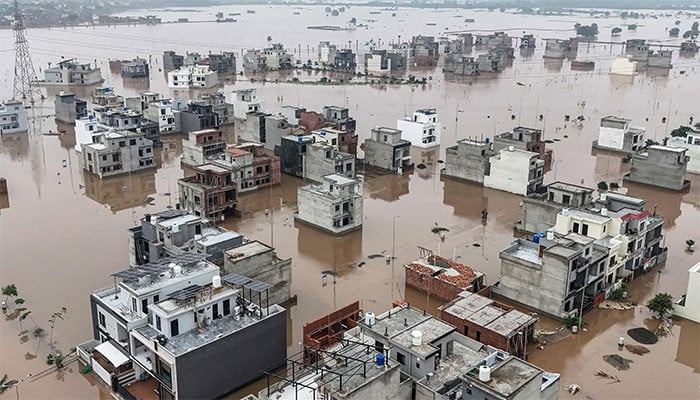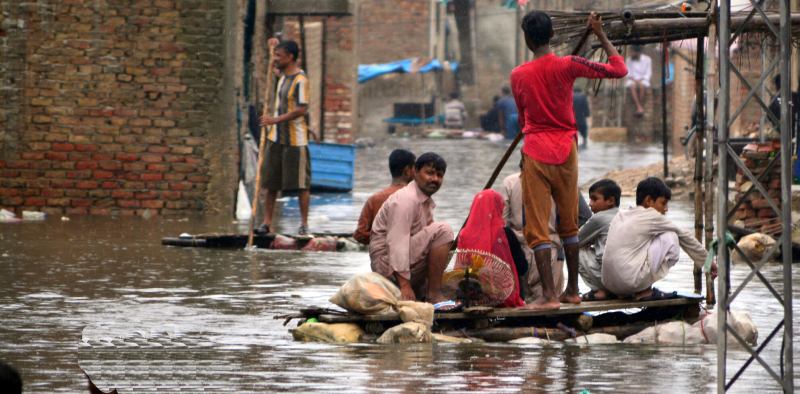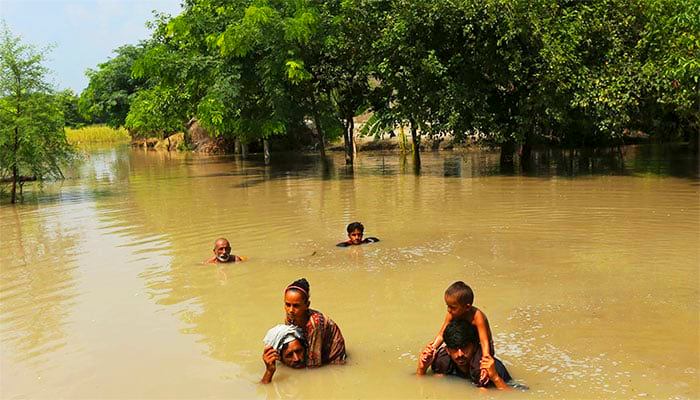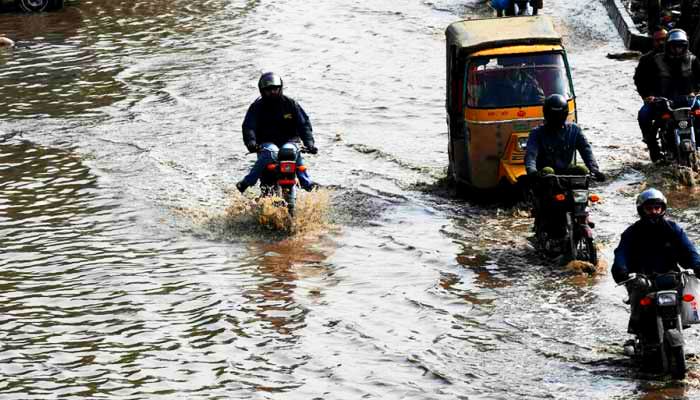
Torrential monsoon rains have caused severe flooding across Sindh and Punjab provinces, inundating highways, city streets and thousands of villages. Major towns — including Hyderabad, Sukkur, Khairpur, Mirpurkhas, Sujawal, Dadu, Jamshoro, Sehwan, Multan, Muzaffargarh, Jhang, Lodhran, Hafizabad, Bahawalpur, Vehari and Faisalabad — are reporting widespread waterlogging, collapsed embankments and large-scale evacuations.
Current Situation: Damage, Breaches and Human Cost
Urban streets and markets have turned into pools and canals in many areas. In Faisalabad, authorities recorded an extreme 24-hour total of 320 mm of rain, overwhelming drainage networks. In southern Punjab, rising Chenab river waters forced authorities to consider controlled breaches (including in the Shershah/Head Muhammadwala area) to relieve pressure on protective bunds, prompting evacuation orders for downstream communities. Several villages in Jalalpur Pirwala were submerged; reports confirm multiple drownings and ongoing search and rescue operations for missing persons.
- Breached or endangered flood bunds and embankments, forcing planned water releases.
- Thousands of displaced people and many villages submerged — roads and communications cut.
- Crop and farmland losses across Muzaffargarh, Multan and surrounding districts.
- Urban flooding in low-lying neighborhoods of Hyderabad, Karachi suburbs and many district towns.
Rescue, Evacuations and Government Response
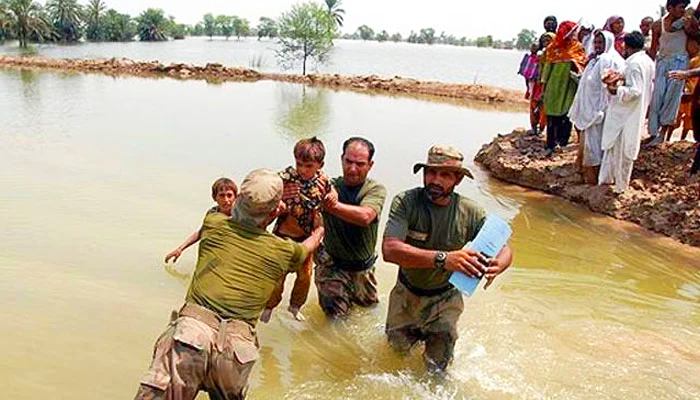
National and provincial authorities have mobilized NDMA, provincial disaster teams and military resources for rescue, relief and evacuation. The Prime Minister ordered NDMA and other agencies to accelerate relief operations, restore power and communication in flood-hit areas, and speed up search operations for missing people. Large numbers of civilians — in some districts hundreds of thousands — have been moved to safer locations or informal shelters while relief camps are being established.
Areas of Immediate Concern: Rivers & Downstream Flow
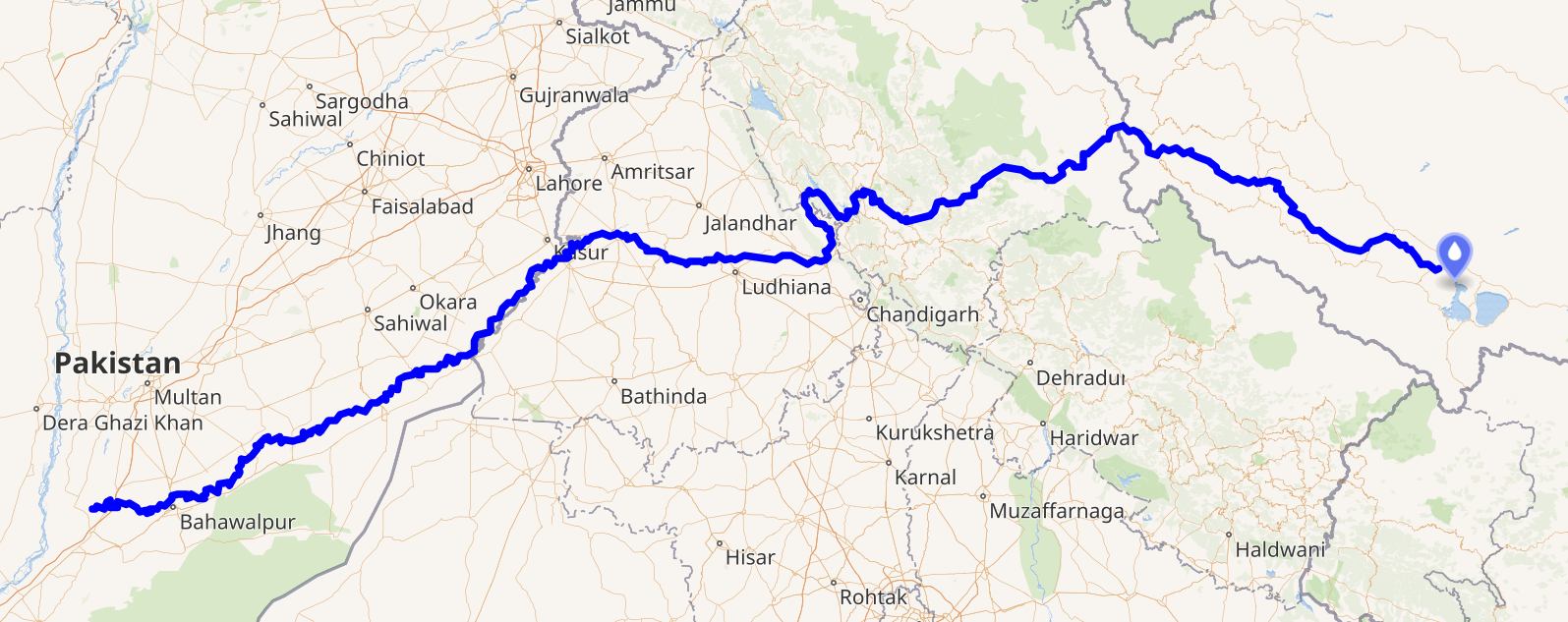
River levels in the Chenab and Indus systems are at dangerous highs. Officials warn that surges in the Chenab and releases passing Head Trimmu and Guddu could push floodwaters downstream into Sindh’s low-lying katcha belts, threatening Kashmore, Dadu and other districts. Sindh authorities are urging residents in riverine belts to move to higher ground as flows from Punjab approach the province.
Local Incidents (selected)
• Jalalpur Pirwala (Multan division): Several villages flooded, four people reported drowned in one chack; rescue/searchs continue.
• Rahim Yar Khan (Noorwala area): A rescue boat capsized; bodies recovered and several missing.
• Muzaffargarh: Zamindara bund breach reported; widespread inundation of farmland and populated villages.
• Hyderabad & Sujawal (Sindh): Low-lying city zones submerged with multiple road closures and power outages.
Historical Context: How 2025 Floods Compare to 2010 & 2022
Pakistan has a recent and painful memory of large catastrophic floods. Two benchmark disasters are the 2010 and 2022 flood events:
- 2010 floods — Originating from extreme monsoon rainfall, the 2010 floods affected roughly one-fifth of the country, caused nearly 2,000 fatalities and displaced millions. The event damaged vast stretches of infrastructure, roads and crops, and required extensive international humanitarian support. (Reference historical data.)
- 2022 floods — From June to October 2022, Pakistan experienced another catastrophic monsoon that the government and international agencies described as among the worst in recent history. The 2022 event killed over 1,700 people, affected millions, and caused estimated damages approaching tens of billions USD — a benchmark for modern Pakistani flood response and rehabilitation needs.
Why historical comparison matters: Officials and aid planners compare current rainfall, river-flow rates and the number of displaced people to 2010 and 2022 to gauge the potential scale of damage and to decide on controlled breaches, resource allocation, international aid requests, and long-term rehabilitation planning.
Immediate Needs & Public Health Risks
Displaced families need immediate shelter, clean drinking water, medical care, and sanitation. Stagnant floodwaters raise risks of waterborne diseases (diarrhea, cholera-like illnesses), vector-borne diseases (mosquitoes), and injuries from debris. Rapid clearing of access routes and restoration of electricity and water systems are priorities for reducing secondary humanitarian harms.
How Citizens Can Stay Safer
- Follow evacuation orders from local administration and move to designated safe sites.
- Avoid walking or driving through floodwater — even shallow water can sweep people and vehicles away.
- Keep emergency kits: drinking water, basic medicines, torch, mobile power bank, and identity documents in a waterproof bag.
- Share information with neighbors, and register missing persons with local rescue authorities.
Note to readers: This article aggregates verified media reports and official statements about the floods. Figures and local conditions are changing quickly; check local official channels and NDMA / provincial disaster pages for live updates.