UNESCO Welcomes Completion of Lahore Fort Picture Wall Restoration
Posted on May 19, 2026
A 400-Year-Old Mughal Masterpiece Revived for Future Generations
LAHORE – UNESCO has officially welcomed the completion of the restoration of the historic Picture Wall at Lahore Fort, describing it as a major achievement in heritage conservation and cultural preservation.
In April 2026, the restoration of the northern section of the Picture Wall was formally completed after more than ten years of scientific research, documentation, and interdisciplinary conservation work.
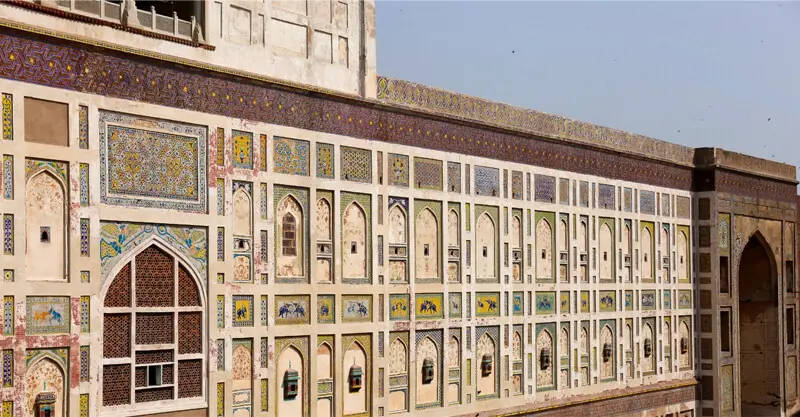
The Picture Wall is considered one of the largest and most intricate mural walls in the world, telling a remarkable 400-year story through art, architecture, and craftsmanship.
The Magnificent Picture Wall of Lahore Fort
Stretching nearly 475 metres in length and averaging 17 metres in height, the Picture Wall runs along the northern and western sides of the historic Lahore Fort.
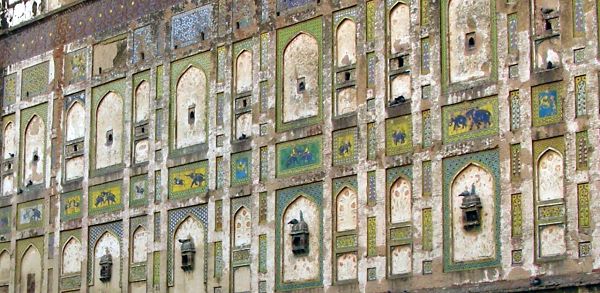
Constructed during the reigns of the Mughal emperors Jahangir and Shah Jahan in the seventeenth century, the wall contains approximately 2,000 elaborately decorated recessed panels arranged across three levels.
The wall depicts:
Royal hunting scenes
Mughal processions
Angels and mythical figures
Animals and birds
Geometric and floral patterns
Persian and Central Asian artistic motifs
The artistic beauty of the wall comes from the use of multiple decorative techniques including:
Glazed tile mosaic (Kashikari)
Fresco painting
Marble inlay work
Red sandstone jali screens
Terracotta relief decoration
This extraordinary artistic achievement played a major role in the inclusion of Lahore Fort on the UNESCO World Heritage List in 1981.
A Global Heritage Conservation Project
As one of Pakistan’s most important UNESCO World Heritage Sites, Lahore Fort carries immense global cultural significance.
The restoration project was led by young Pakistani conservation professionals working in partnership with local and international institutions under the supervision of the Aga Khan Trust for Culture and with technical support from international conservation experts.
A significant number of the conservation specialists involved in the project were women, serving as:
Conservation scientists
Architects
Archaeologists
Surface conservators
Ceramic specialists
Traditional artisans
The Picture Wall itself reflects a fascinating blend of artistic influences, including Persian mythology, Central Asian traditions, European decorative elements, and even Christian imagery.
Scientific Restoration and Advanced Technology
The conservation initiative began in 2015 through a collaboration between the Aga Khan Cultural Service – Pakistan (AKCS-P) and the Walled City of Lahore Authority (WCLA).
The first phase involved comprehensive scientific documentation of the entire Picture Wall using advanced technologies such as:
3D laser scanning
Electronic Distance Measurement (EDM) instruments
High-resolution ortho-rectified photography
This marked the first time such large-scale heritage documentation technologies were used in Pakistan.
Based on this scientific research, a prototype conservation section measuring 11 metres wide and 16 metres high was selected on the western façade to test restoration methods and conservation standards.
In January 2018, an international conservation workshop brought together leading heritage experts, chemists, architects, and conservators to evaluate the prototype and establish guidelines for the larger restoration project.
Following the successful testing phase, conservation work officially began in March 2018 on the larger western section of the wall.
International Support for Heritage Preservation
The restoration project was made possible through collaboration between Pakistani institutions, international partners, and cultural preservation organizations.
Key contributors included:
Punjab Government
Walled City of Lahore Authority (WCLA)
Aga Khan Cultural Service – Pakistan
Royal Norwegian Embassy
German Federal Foreign Office
Ambassadors Fund for Cultural Preservation
A total of approximately $1.5 million was invested in the conservation project.
International Recognition
Tausif Khwaja, CEO of Aga Khan Cultural Service – Pakistan, stated:
“The Picture Wall is a key reason for the Lahore Fort’s UNESCO World Heritage status, and this project has proven that world-class heritage conservation is achievable in Pakistan.”
Fuad Pashayev, UNESCO Representative in Pakistan, also praised the completion of the restoration, describing it as:
“A testament to what can be achieved when scientific rigour, international solidarity and local expertise work in concert.”
Experience the Heritage of Lahore and Pakistan
Travelers interested in exploring the magnificent heritage of Lahore and Pakistan can discover these historic sites through our cultural tours:
The successful restoration of the Lahore Fort Picture Wall marks a historic achievement for heritage conservation in Pakistan.
Beyond preserving a priceless Mughal masterpiece, the project demonstrates the growing capacity of Pakistani conservation professionals to protect and restore world-class cultural monuments using scientific methods and international collaboration.
As visitors continue to admire the revived beauty of the Picture Wall, this extraordinary monument will remain a symbol of Lahore’s rich artistic legacy and Pakistan’s enduring cultural heritage.