The Forgotten Tomb of Multan
A 426-Year-Old Architectural Treasure Hidden in the City of Saints
Multan, known throughout South Asia as the “City of Saints,” is famous for its magnificent shrines, blue-tiled domes, and centuries-old spiritual traditions. Yet among its many celebrated monuments stands a remarkable tomb that remains surprisingly overlooked despite its immense historical, architectural, and spiritual significance.
The shrine of Hazrat Sakhi Sultan Shah Ali Akbar Shamsi, located in the historic neighborhood of Suraj Miani, is one of the oldest and most beautiful mausoleums in Multan.
At approximately 426 years old, this extraordinary structure deserves recognition among the greatest historical tombs of Multan. However, unlike many famous shrines of the city, it has not received the attention or fame it truly deserves.
 A Smaller Reflection of Shah Rukn-e-Alam’s Magnificence
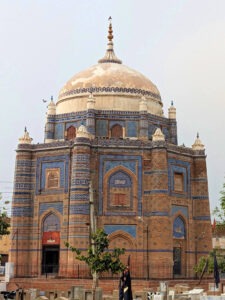
The tomb is often described as a smaller version of the famous shrine of Shah Rukn-e-Alam because of its impressive octagonal design and magnificent architectural style.
The structure features eight corners and elegant arches, representing the distinctive architectural traditions that once made Multan one of the great artistic and spiritual centers of the Islamic world.
The beautiful tile work, geometric patterns, and harmonious proportions make this monument a masterpiece of Multani architecture.
One of the most fascinating aspects of the shrine is the presence of five decorative inscription borders surrounding the structure.
- The uppermost border contains the saint’s genealogy and the beautiful Names of Allah (Asma-ul-Husna).
- The second border carries Durood Sharif and praises of the Ahl al-Bayt.
- The remaining three borders contain remarkable Persian poetry related to spiritual purification, morality, and self-discipline.
These inscriptions give the monument a rare intellectual and spiritual distinction among the shrines of Multan.

Lineage and Early Life
Hazrat Shah Ali Akbar Shamsi’s full name was Syed Ali Akbar. His father was Syed Musa Zahir Ali Shamsi, while his mother, Bibi Fatima, was the daughter of Sultan Hussain Langah, ruler of Multan during the Langah Sultanate period.
He was born in 880 Hijri in the town of Seetpur, located in present-day Alipur Tehsil of Muzaffargarh District.
He received his early education from his father before traveling to the historic city of Uch Sharif, where he completed higher religious studies under renowned scholars of the time.
After completing his education, Hazrat Shah Ali Akbar Shamsi traveled through various regions to preach Islam and spread spiritual teachings. Historical traditions suggest that many non-Muslim tribes accepted Islam through his efforts and influence.

Construction of the Mausoleum
After the passing of his father in 923 Hijri, Hazrat Shah Ali Akbar Shamsi moved permanently to Multan.
Construction of the mausoleum reportedly began in 993 Hijri (1585 CE) and took nearly fifteen years to complete.
The shrine was commissioned by the saint’s grandson, whose grave is also located inside the tomb complex near the main burial chamber.
Ancient inscriptions reveal that the construction work was carried out by Ibrahim and Rajab, sons of the renowned architect Musa Lahori.
These details remain preserved in historical inscriptions, adding immense documentary and architectural value to the monument.

Spiritual Importance and the Shamsi Tradition
Hazrat Shah Ali Akbar Shamsi is believed to be an eighth-generation descendant of Hazrat Shah Shamsuddin Sabzwari, one of the most influential Sufi saints associated with Multan.
He is regarded as a prominent figure within the Shamsi spiritual tradition and is connected with the Ismaili missionary and mystical heritage that shaped the spiritual history of southern Punjab.
The shrine therefore represents not only a remarkable architectural monument but also an important center of spiritual and intellectual history.

Suraj Miani – The “Kabuli Mohalla” of Multan
The area surrounding the shrine, known as Suraj Miani, became prosperous during the Durrani period because of active trade links with Afghanistan.
As commercial relations between Multan and Kabul expanded, many residents adopted Afghan architectural styles in their homes and neighborhoods.
Due to this strong Afghan influence, the area became popularly known as the “Kabuli Mohalla.”
Even today, traces of that old cultural atmosphere can still be seen in the narrow streets and historic structures of the locality.

An Overlooked Monument of Extraordinary Importance
Despite its remarkable beauty and historical significance, the shrine of Hazrat Sakhi Sultan Shah Ali Akbar Shamsi remains one of the most neglected heritage monuments in Multan.
It deserves greater public awareness, academic research, conservation efforts, and inclusion in cultural tourism programs focused on the architectural and spiritual heritage of Pakistan.
For historians, photographers, architects, spiritual seekers, and heritage travelers, this shrine offers an extraordinary glimpse into the artistic brilliance and Sufi traditions that shaped medieval Multan.

Explore the Heritage of Pakistan
Travelers interested in discovering the rich historical and spiritual heritage of Pakistan may also enjoy our specialized cultural tours:

Conclusion
The tomb of Hazrat Sakhi Sultan Shah Ali Akbar Shamsi is far more than an old structure—it is a living symbol of Multan’s artistic, spiritual, and historical identity.
Its elegant octagonal design, Persian poetry, sacred lineage, and centuries-old history make it one of the city’s most valuable yet underappreciated treasures.
As modern urban development continues to transform ancient neighborhoods, preserving monuments such as this becomes increasingly important so future generations may continue to learn from and appreciate the extraordinary heritage of Multan.