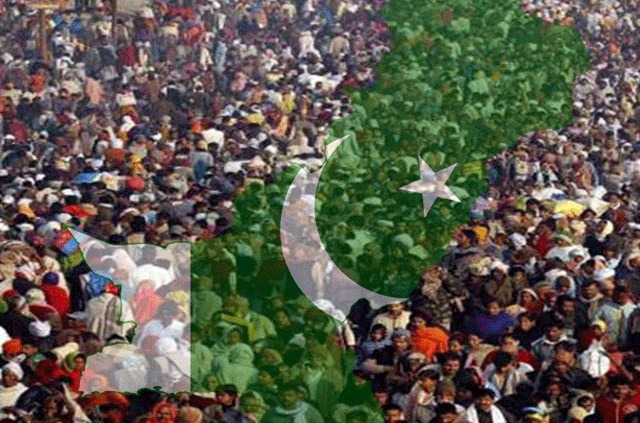
Pakistan today faces one of its most serious internal challenges—not from an external enemy, but from within. The country is confronting what many experts describe as a “population bomb,” growing silently yet rapidly. The findings of the 2023 census present a troubling picture, raising serious concerns about the nation’s future.
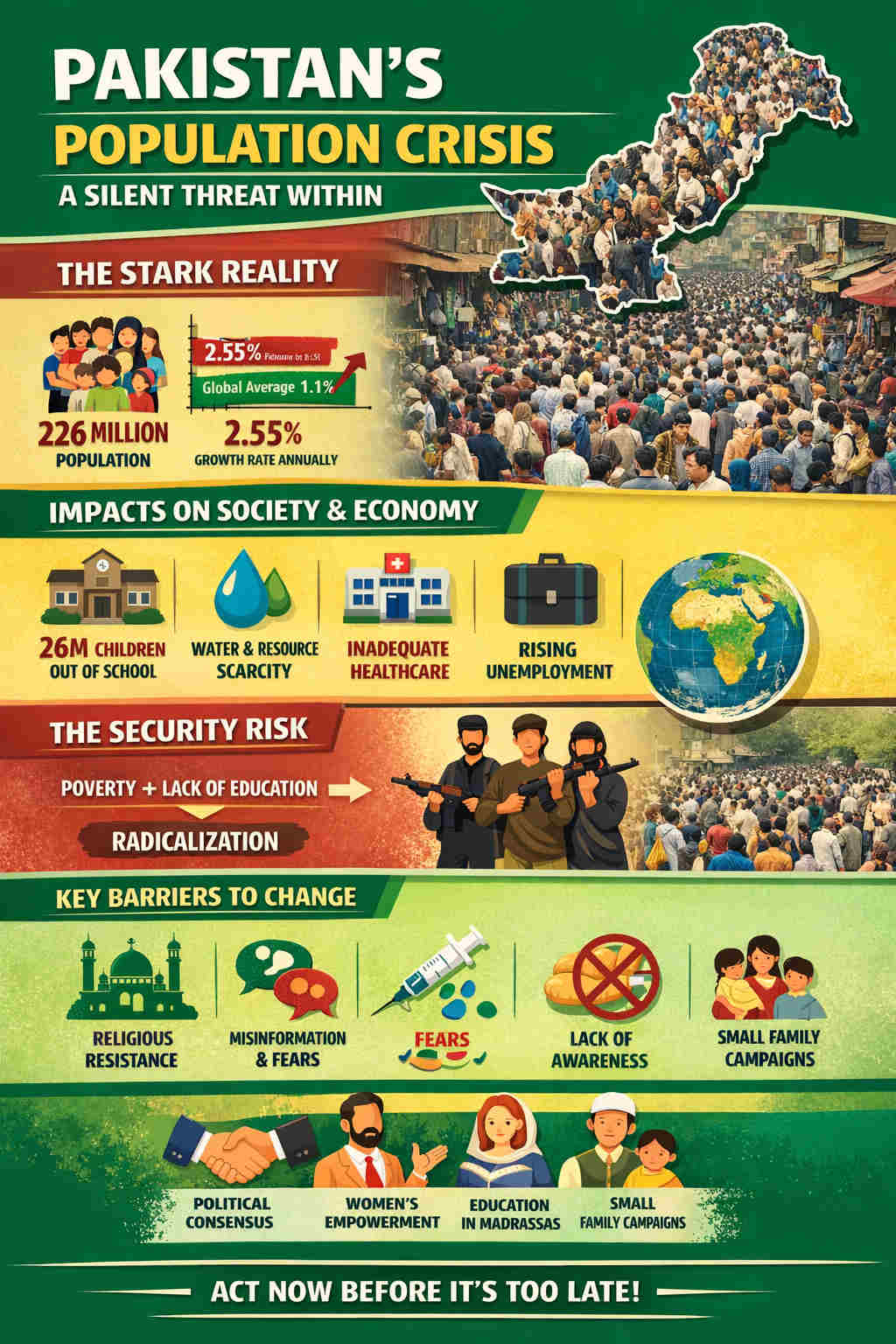
With an annual population growth rate of approximately 2.55%, Pakistan is growing at more than double the global average of around 1.1%. The country has now become the fifth most populous nation in the world. However, the harsh reality is that its resources, infrastructure, and economy are struggling to keep pace with this rapid expansion.
A Cycle of Growth and Strain
Pakistan appears trapped in a cycle where economic progress is constantly undermined by population growth. Any gains in development are quickly absorbed by the increasing number of people, leaving little improvement in the standard of living for ordinary citizens.
Historical Perspective
Pakistan was not always indifferent to this issue. In the 1950s and 1960s, it was among the first countries in the region to recognize the importance of family planning. During the era of economic reforms, structured campaigns were introduced to address population growth.
However, political instability in later decades, along with ideological shifts, pushed this critical issue into the background. In particular, during certain periods, public narratives shaped by religious interpretations created resistance to family planning initiatives. As a result, the issue became controversial rather than a matter of national policy.
Efforts such as the Lady Health Workers program in the 1990s showed promise, but over time, funding shortages and administrative hurdles limited their effectiveness.
Link to National Security
One of the most concerning aspects of rapid population growth is its connection to national stability. Birth rates are significantly higher among lower-income groups, where access to education, healthcare, and resources is limited.
In many cases, families with large numbers of children struggle to provide basic necessities. This often leads to children missing out on formal education, limiting their future opportunities. Such conditions can also make vulnerable populations more susceptible to social and economic instability.
Barriers to Family Planning
A major challenge in Pakistan is the perception surrounding family planning. Misconceptions and lack of awareness have led many to view it as unnatural or influenced by external agendas.
In some regions, even public health initiatives have faced resistance due to misinformation. These attitudes highlight the broader issue of awareness and education, which continues to hinder progress in addressing population growth.
Lessons from Other Countries
Several Muslim-majority countries—including Iran, Turkey, Indonesia, and Saudi Arabia—have successfully implemented family planning policies as part of their national development strategies.
Bangladesh offers a particularly relevant example. Despite limited resources after independence, it prioritized population control, invested in women’s empowerment, and built a strong network of community health workers. Today, its population growth rate is significantly lower, and its economy is progressing steadily.
Impact on Economy and Society
The consequences of rapid population growth are visible across multiple sectors:
- Over 26 million children remain out of school
- Shortages of clean drinking water
- Inadequate healthcare facilities
- Rising unemployment
- High levels of child malnutrition, exceeding 40%
Additionally, high birth rates are affecting maternal health, creating long-term challenges for public health systems and future generations.
The Way Forward
Addressing population growth is not just a social issue—it is a matter of national importance. A coordinated and long-term strategy is essential. Key steps include:
- Political consensus across all parties
- Women’s empowerment through education and healthcare
- Inclusion of modern education in religious institutions
- Public awareness campaigns promoting smaller family sizes
Pakistan stands at a critical turning point. Without decisive action, population growth could continue to strain resources and slow economic progress. However, with the right policies, awareness, and commitment, it is possible to transform this challenge into an opportunity for sustainable development.
The time to act is now—before the silent threat becomes an irreversible crisis.