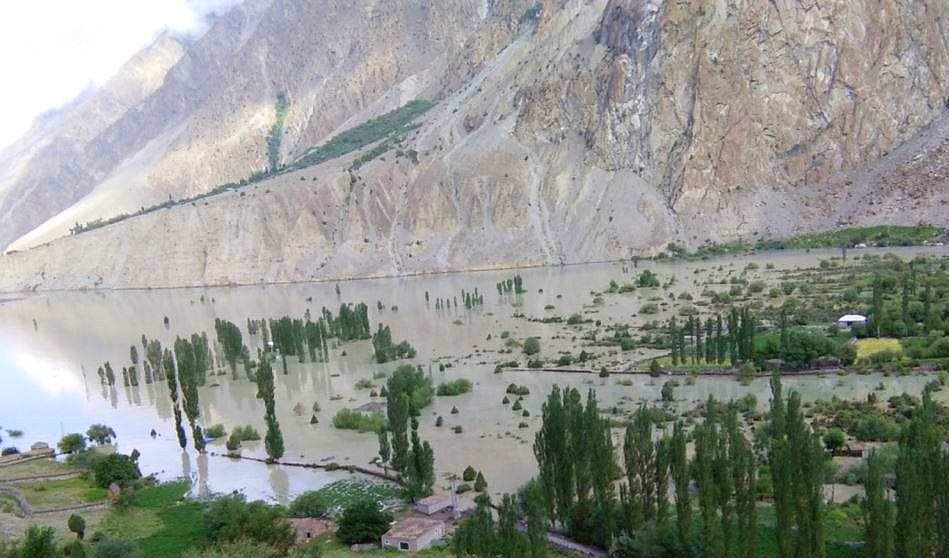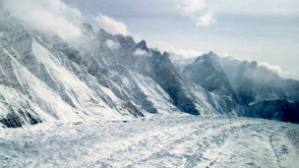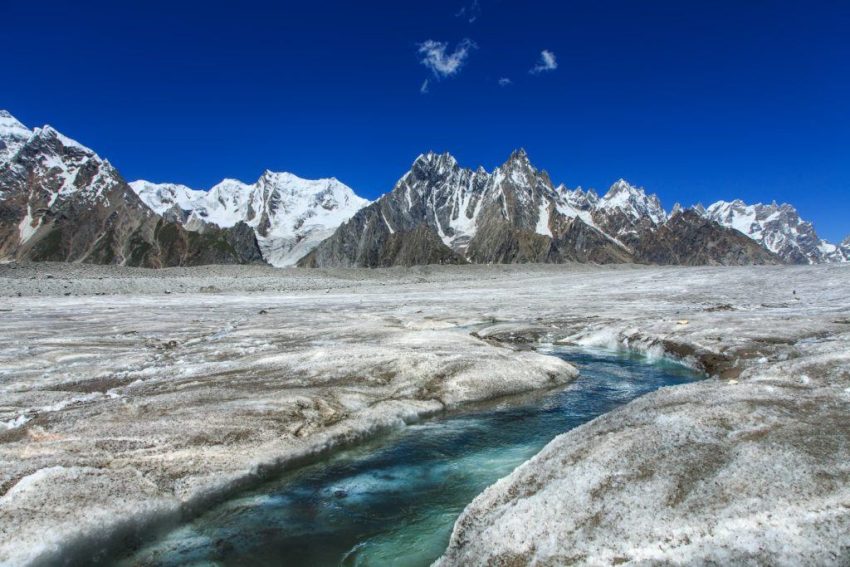
Gilgit-Baltistan is home to over 8,400 glaciers, including some of the world’s longest outside the polar regions such as the Biafo Glacier (67km), Batura Glacier (57km), and Hispar Glacier (49km). These glaciers feed into rivers that support millions in Pakistan. But now, heatwaves and glacial calving are intensifying, triggering catastrophic flooding across the region.
Unusual weather patterns and soaring temperatures have rapidly melted glaciers, overwhelming streams and rivers. The once-quiet valleys are witnessing deadly Glacial Lake Outburst Floods (GLOFs), damaging homes, farmland, and vital infrastructure.
The Atabad Lake Catastrophe
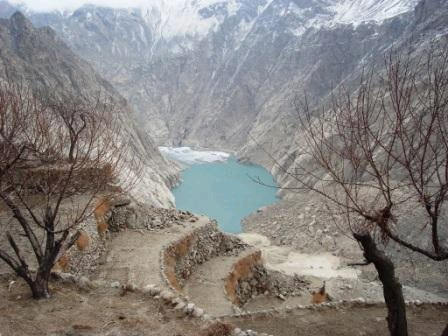
One of the region’s starkest reminders of nature’s power is Atabad Lake, formed in 2010 after a massive landslide blocked the Hunza River. It submerged entire villages and cut off road access, displacing thousands. Ironically, today’s tourist resorts built near or above such unstable regions are sitting on geological time bombs.
Unsafe Urban Expansion on Unstable Terrain
Unregulated, overpriced hotels and commercial structures have mushroomed in hazard zones. Experts warn that natural shifts — including glacier surges and earthquakes — may make this destruction inevitable. However, loss of life and property can be avoided through sensible planning, environmental respect, and stronger enforcement of safety laws.
Failure of Early Warning Systems
Despite billions invested in early warning systems, many sensors are non-functional, stolen, or poorly installed by international donors without consulting local experts. As a result, alerts are often too late to save lives or infrastructure.
The Shisper Glacier in Hunza, for instance, continues to show dangerous movements. Chunks of ice breaking off — called glacial calving — travel downstream, block river flow, and release devastating floods once they melt.
Climate Patterns Gone Awry
Snowfall is now erratic — often occurring in spring rather than winter — which prevents snow from turning into solid glacier ice. Instead, it melts quickly in May and June, causing flash floods and disrupting water storage cycles. Long dry seasons, deforestation, and vehicle emissions further degrade the environment.
What the Future Holds
The signs are clear: nature is reclaiming its space. Whether through glacier surges, landslides, or flooding, the region is undergoing a profound transformation. Historically, these shifts are part of Earth’s evolution. But through sustainable development and better policy enforcement, we can adapt and avoid the worst human losses.
Only by respecting nature can we hope to coexist with it — not against it.